





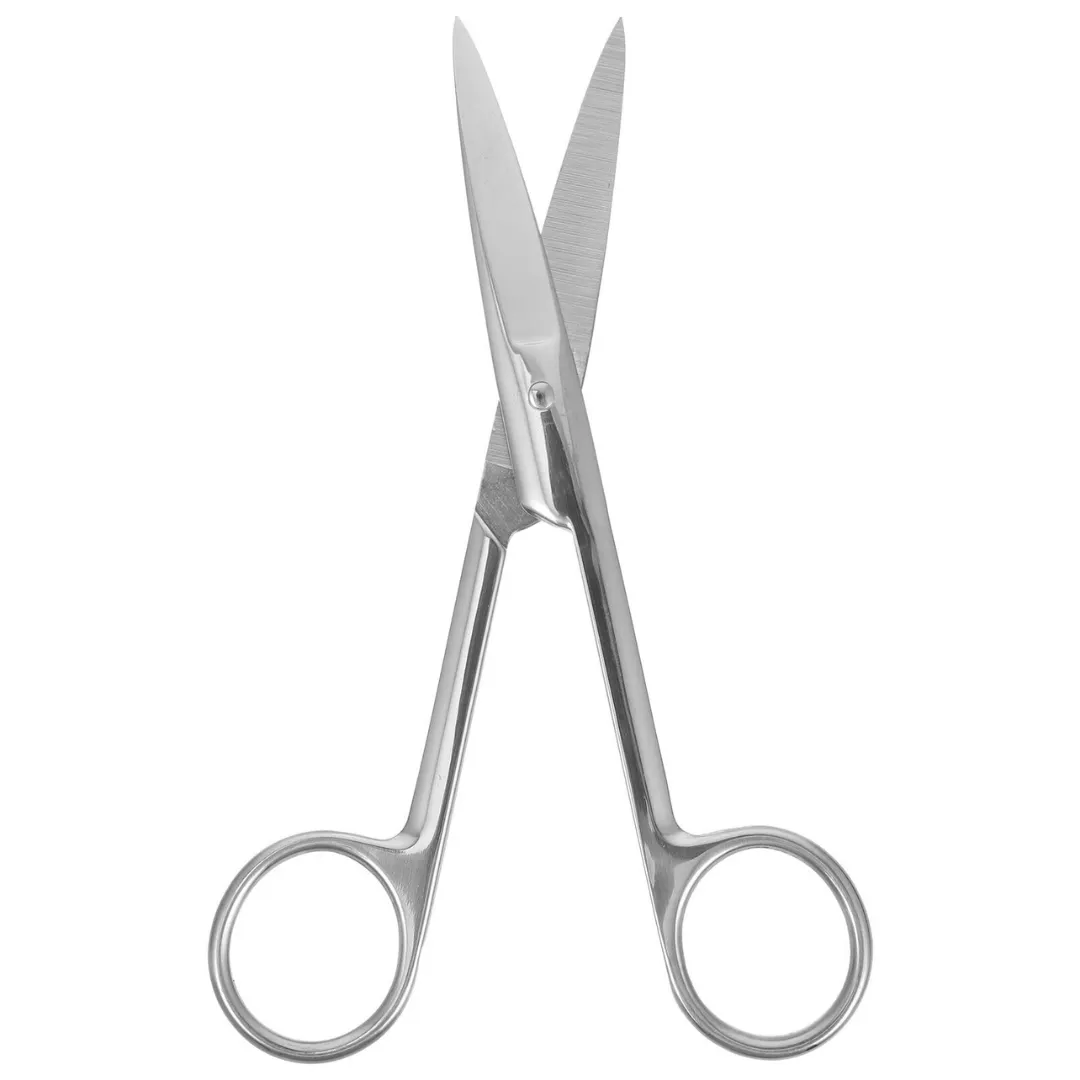
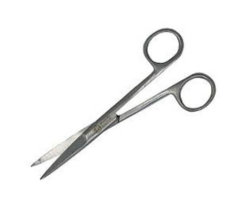
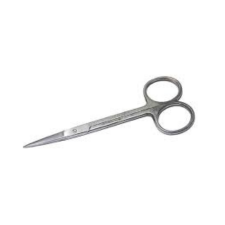
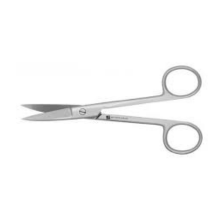
DESCRIPTION
Surgical scissors are specialized cutting instruments designed for specific tasks during medical procedures, ranging from delicate tissue dissection to cutting tough bandages or sutures. Unlike household scissors, they are crafted with high precision, often using medical-grade stainless steel or tungsten carbide.
Anatomy of Surgical Scissors
Most surgical scissors follow a standard design composed of several key parts:
-
Finger Rings: Used for grip and control.
-
Shanks: The long arms connecting the rings to the joint.
-
Hinge/Box Lock: The pivot point that determines the smoothness of the “throw.”
-
Blades: The cutting surfaces, which can be straight, curved, blunt, or sharp.
Specialized Features
To improve performance and longevity, many scissors include these technical enhancements:
-
Black Handles (SuperCut): Indicates one blade is razor-sharp and the other is micro-serrated to prevent tissue from slipping.
-
Gold Handles: Indicates Tungsten Carbide (TC) inserts. These are harder than stainless steel, meaning they stay sharp significantly longer.
-
Curved vs. Straight: Curved blades offer a better “line of sight” and maneuverability in deep cavities, while straight blades are best for surface-level or mechanical cutting (like sutures).
-




Reviews
There are no reviews yet.