





DESCRIPTION
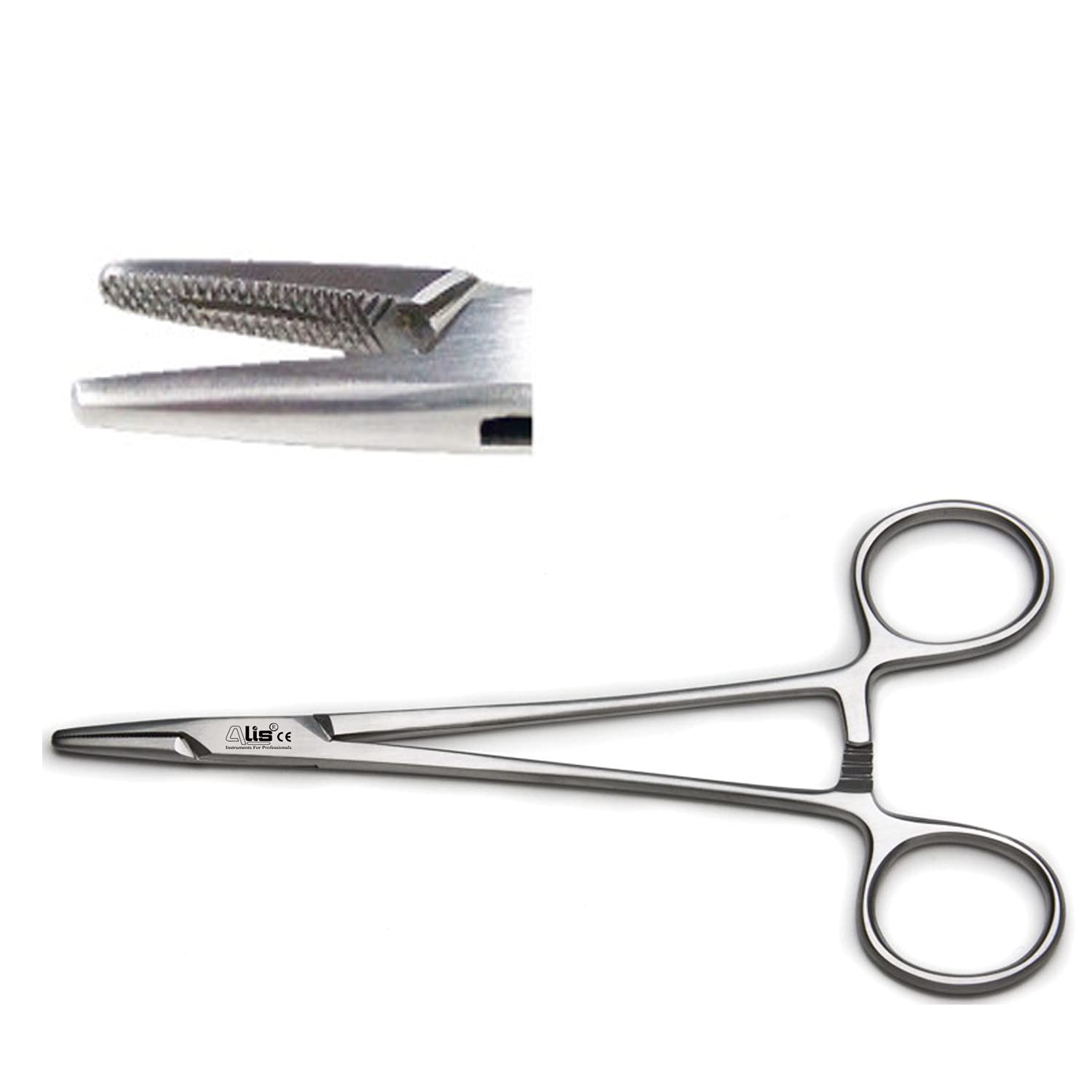
A needle holder (also called a needle driver) is a specialized surgical instrument used by doctors and veterinarians to hold a suturing needle during the closing of wounds or surgical incisions. Think of it as a highly precise, heavy-duty pair of pliers designed for the delicate art of sewing human tissue.
Key Features
While they might look like standard scissors or hemostats at a glance, needle holders have distinct characteristics:
-
The Jaws: Usually short and blunt compared to the handle. The inner surface is often textured (cross-hatched) or lined with Tungsten Carbide inserts to provide a rock-solid grip on the needle so it doesn’t twist or slip.
-
The Ratchet: A locking mechanism near the finger rings. This allows the surgeon to “click” the tool shut, maintaining a firm grip on the needle without needing to apply constant hand pressure.
-
The Shank: The arms of the instrument. Depending on the depth of the wound, these can be short (for surface stitches) or very long (for deep internal surgery).
-
How it’s Used
-
Grasping: The needle is clamped at the tip of the jaws, usually about one-third of the way from the eye (the “swaged” end).
-
Driving: The surgeon uses a wrist-rotation motion to drive the curved needle through the tissue.
-
Locking/Unlocking: The ratchet ensures the needle doesn’t rotate mid-stitch, but it can be released with a quick flick of the fingers to reposition.
-


Reviews
There are no reviews yet.