





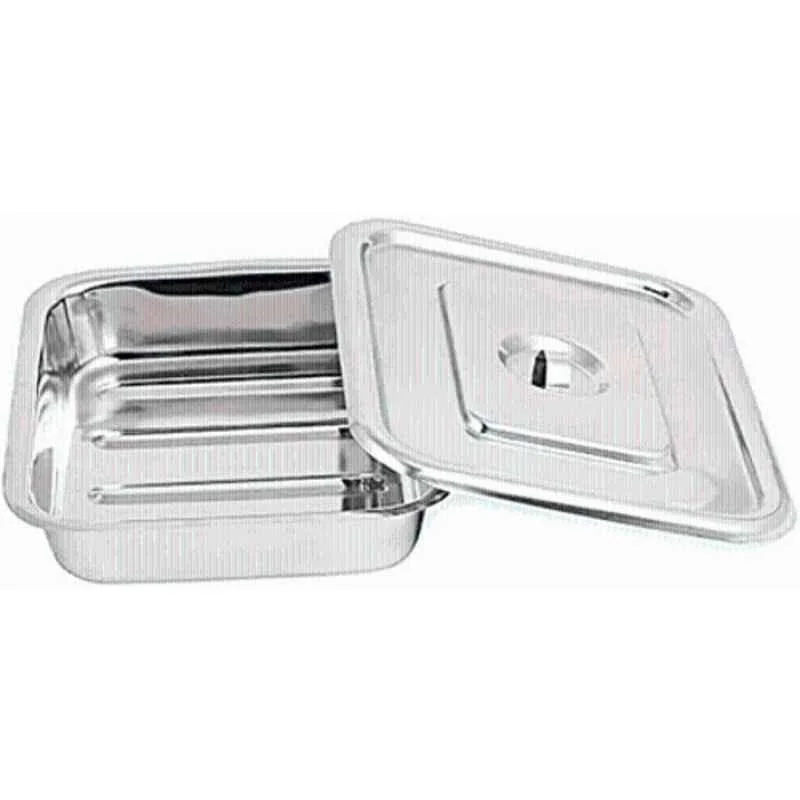
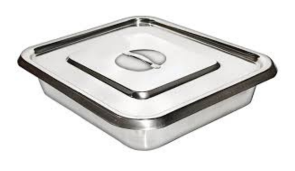
DESCRIPTION
In the world of medical and laboratory procedures, an instrument tray is much more than just a metal dish. It is a critical component for maintaining sterility, organization, and efficiency during clinical tasks.
Here is a breakdown of what defines these trays and the common types you’ll encounter.
1. Core Purpose
The primary goal of an instrument tray is to provide a standardized, sterile environment for tools.
-
Organization: Allows practitioners to find tools quickly without fumbling.
-
Decontamination: Designed to withstand high heat (autoclaving) and harsh chemical disinfectants.
-
Anatomy of a Standard Tray
Most professional trays share a few design “must-haves”:
-
Coved Corners: The interior corners are rounded (not sharp 90-degree angles) to prevent bacteria from hiding in crevices.
-
Lip/Rim: A rolled edge allows for a secure grip, even when wearing wet surgical gloves.
-
Lids: Many come with specialized lids that lock to maintain a “sterile field” during transport from the sterile processing department to the OR.
Protection: Prevents delicate surgical tips from getting damaged during transport.
-
Usage in the “Sterile Chain”
-
Setup: Tools are laid out in the order of use (usually left to right).
-
Procedure: The tray acts as the “home base” for used and clean tools.
-
Reprocessing: After use, the entire tray is often placed in an ultrasonic cleaner or autoclave.
-




Reviews
There are no reviews yet.