





DESCRIPTION
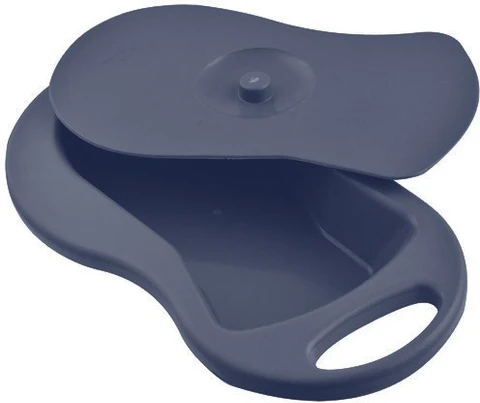
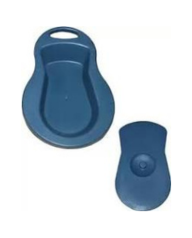
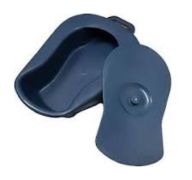
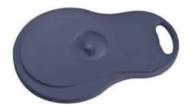
A bedpan is a specialized medical device used for the collection of feces and urine from patients who are “bedbound”—meaning they are unable to use a toilet or a bedside commode due to illness, injury, surgery, or frailty.
While the concept is simple, there are two distinct types designed for different patient needs.
1. Standard Bedpan
This is the traditional, “contour” shaped pan. It is larger and has a high, rounded rim.
-
Design: It resembles a toilet seat in shape, with a wide opening and a deep reservoir.
-
Best For: Patients who can lift their hips (using a “bridge” motion) to allow the pan to be slid underneath them.
-
Capacity: Holds more volume than a fracture pan.
2. Fracture Bedpan
This version is smaller and has a much lower profile.
-
Design: It is wedge-shaped with one flat end. The low profile allows it to be slid under a patient with minimal lifting.
-
Best For: Patients with hip fractures, casts, spinal injuries, or those who are very thin and find the standard pan painful.
-
Usage: The flat end is placed toward the patient’s back.
Key Materials and Features
-
Materials: * Plastic (Polypropylene): Most common today; lightweight, warmer to the touch, and often disposable or easy to clean.
-
Stainless Steel: Extremely durable and easy to sterilize in an autoclave, though often cold and uncomfortable for the patient unless warmed.
-
-
Anatomical Contouring: Modern pans are shaped to follow the curve of the human buttocks to prevent pressure sores and minimize splashing.
-
Non-Stick Surfaces: Many plastic versions feature a smooth finish to make emptying and cleaning more hygienic.
A Quick Tip for Comfort
If you are using a metal bedpan, running it under warm water (and drying it) before use can significantly reduce the “shock” for the patient. For plastic pans, a light dusting of baby powder on the rim can help it slide into place without sticking to the skin.



Reviews
There are no reviews yet.