



DESCRIPTION
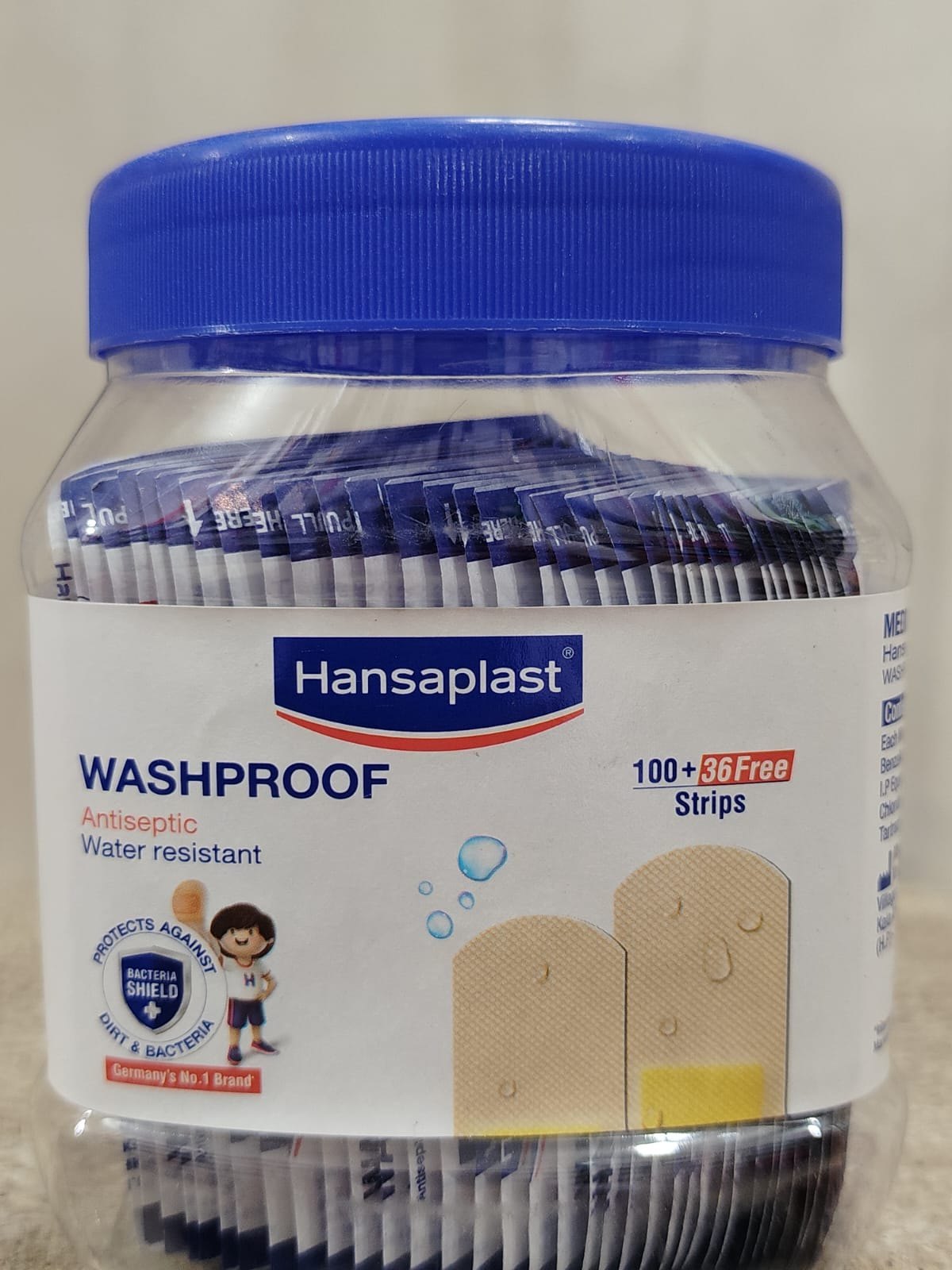
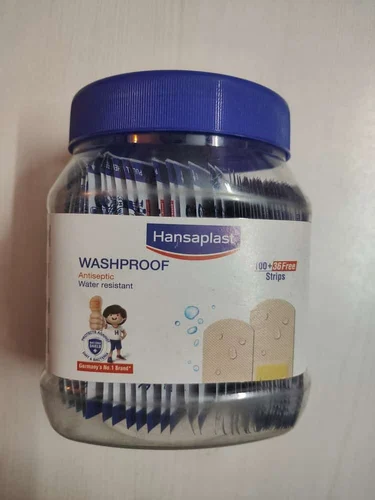
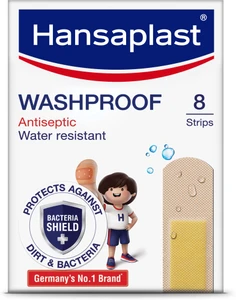
Hansaplast Washproof Antiseptic bandages are designed for the protection of minor everyday wounds, such as cuts, scrapes, and abrasions, specifically in environments where they may come into contact with water.1
Below is a detailed description of its features, composition, and usage instructions.
Core Features & Benefits
-
Water-Resistant Protection: Features a waterproof lamination that shields the wound from water, allowing for normal activities like hand washing, showering, or swimming.2
-
Antiseptic Medicated Pad: The central wound pad is treated with an antiseptic agent to help prevent infections and manage bacterial growth.3
-
Breathable Material: Despite being washproof, the material allows air to reach the skin, which is essential for healthy and faster healing.4
-
Strong Adhesion: Designed with a high-performance adhesive that keeps the bandage securely in place for up to 8 hours, even when wet.5
-
Discreet Design: Often comes in skin-colored or transparent options with a light-colored wound pad to blend naturally with the skin.6
Technical Specifications
| Feature | Details |
| Active Ingredient | Benzalkonium Chloride Solution (equivalent to 0.05% w/w) |
| Standard Size | Approx. 70mm x 19mm (standard strip) |
| Material | Flexible, water-resistant film with a non-stick wound pad |
| Bacteria Shield | Blocks up to 99% of dirt and bacteria |
How to Use
-
Clean: Gently clean the wound with water or an antiseptic spray to remove dirt and debris.7 Pat the surrounding skin completely dry to ensure the adhesive sticks properly.8
-
Apply: Peel off the protective liners and place the medicated pad directly over the wound.9 Press down the edges firmly to create a seal.10
-
Do Not Stretch: Avoid stretching the plaster during application, as this can cause skin irritation or lead to the edges peeling off prematurely.11
-
Change: It is recommended to change the bandage every 24 hours or immediately if the wound pad becomes wet or dirty.12
When to Consult a Doctor
-
If the wound is deep, gaping, or bleeding excessively.13
-
If you notice signs of infection (redness, swelling, warmth, or pus).14
-
If there are foreign objects embedded in the wound.15

Reviews
There are no reviews yet.